Digital marketing strategies evolve every single year to meet new consumer demands. Modern brands now face highly complex and fragmented consumer behaviors across multiple platforms. Developing a digital customer journey map plan 2026 is now absolutely required for survival.
Understanding every digital touchpoint creates a massive competitive advantage for your growing company. Businesses must track both the emotional triggers and the logical decisions of their users. Future success depends heavily on data-driven insights and the constant ability to pivot.
The Critical Importance of the Customer Journey Map in 2026
The digital marketplace is becoming more crowded every day. Consumers have unlimited choices at their fingertips. To stand out, you must provide more than just a product. You must provide a seamless, intuitive, and valuable experience. This is where a customer journey map becomes indispensable.
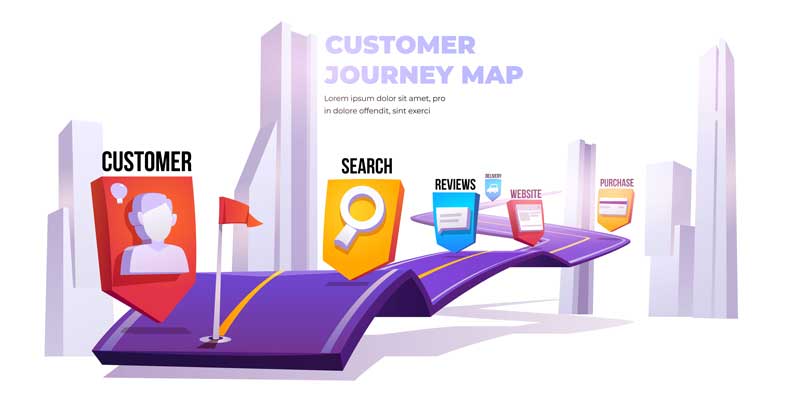
A journey map is a visual story. It illustrates the customer’s relationship with your brand over time. It starts from the moment they first hear about you. It continues long after they have made a purchase. In 2026, this map is not just a drawing. It is a data-backed blueprint for business operations.
Why the Customer Journey Map Strategy 2026 is Different
In the past, journey maps were simple and linear. A customer saw an ad and bought a product. Today, the path to purchase is a web of interactions. A user might start on TikTok and end on a laptop. They might visit your site five times before buying.
Your customer journey map strategy 2026 must account for this non-linear behavior. It must integrate offline and online data. It must also consider the rise of AI-driven search engines. People are no longer just searching for keywords. They are asking AI assistants for specific recommendations.
Key Trends for 2026 Journey Mapping:
Hyper-Personalization: Using real-time data to change the user experience.
AI Integration: Predicting what a customer needs before they ask for it.
Privacy-First Tracking: Respecting user data while still providing relevant content.
Omnichannel Consistency: Ensuring the brand voice is the same on every platform.
In-Depth Industry Statistics and Credible Data
To understand the value of mapping, we must look at the data. Industry leaders have tracked the impact of customer experience for years. These numbers prove that journey mapping is a high-return investment.
According to the Salesforce State of the Connected Customer (5th Edition), 80% of customers agree. They believe the experience a company provides is as important as its products. If the journey is difficult, the product does not matter. Customers will simply find a smoother alternative elsewhere.
Furthermore, McKinsey & Company reports that personalization is no longer optional. Their research shows that companies excelling at personalization generate 40% more revenue. This revenue comes from better customer acquisition and higher retention rates. A journey map is the primary tool used to identify these personalization opportunities.
Gartner predicts that by 2026, 60% of large organizations will use journey orchestration. This technology automatically shifts the customer's path based on their behavior. Without a foundational map, these advanced tools cannot function properly. You need the map to program the automation.
The Five Essential Stages of the Modern Journey
Every successful digital customer journey map plan 2026 covers five main stages. Each stage requires a different tactical approach. You must tailor your content to fit the user's mindset at each point.
1. The Awareness Stage
This is where the journey begins. The customer has a problem or a desire. They may not know your brand exists yet. Your goal is visibility. Use SEO, social media, and educational content here. Do not try to sell yet. Just try to be helpful.
2. The Consideration Stage
Now, the customer knows you. They are comparing you to your competitors. They look at reviews, case studies, and detailed product features. In 2026, social proof is the most powerful tool in this stage. People trust other people more than they trust brands.
3. The Decision (Purchase) Stage
The customer is ready to buy. Any friction here will lead to a lost sale. Is your checkout process fast? Are there hidden shipping costs? A good journey map identifies these "conversion killers." MANA Studio offers technical audits to ensure this stage is flawless.
4. The Retention Stage
The sale is not the end. Keeping a customer is cheaper than finding a new one. This stage involves onboarding, support, and follow-up emails. You want the customer to use the product successfully. Happy customers become repeat buyers.
5. The Advocacy Stage
This is the ultimate goal. You want your customers to promote you. They write reviews and tell their friends. Advocacy turns a linear journey into a self-sustaining loop. It creates organic growth that requires no ad spend.
How MANA Studio Orchestrates Digital Success
Navigating these complexities is difficult for any business owner. You need a partner with a deep technical background. MANA Studio offers bespoke consulting for journey optimization. We do not believe in one-size-fits-all solutions.
We start by analyzing your existing data. We look at heatmaps, click-through rates, and bounce rates. We find the "leaks" in your sales funnel. Then, we build a strategic roadmap for the future. We align your brand’s goals with your customers' needs.
Our work spans across various industries. You can view our diverse portfolio on our service and projects page. We show real-world examples of journey transformation. We help brands move from confusion to clarity.
The Role of AI and Predictive Analytics
By 2026, static maps will be obsolete. The future belongs to dynamic, predictive journeys. AI will analyze billions of data points in seconds. It will identify patterns that humans might miss. It can predict when a customer is about to leave.
Your strategy should include these predictive elements. For example, if a user visits a pricing page twice, trigger a discount. If they stop using your app, send a re-engagement email. This is "journey orchestration" in action. It makes the customer feel seen and valued.
However, technology is only one part of the equation. You must still maintain a human touch. Data tells you "what" is happening. Empathy tells you "why" it is happening. A credible agency balances both sides perfectly.
Creating Value Through Emotional Mapping
Logic makes people think, but emotion makes them act. A great journey map includes an emotional layer. We track the user’s "highs" and "lows" throughout the process. Where are they excited? Where are they confused?
By identifying the "lows," you can intervene. You can add a live chat option to a confusing page. You can simplify a complex form. Improving the emotional experience leads to higher brand affinity. People remember how you made them feel.
Conclusion: Your Roadmap to 2026
The customer journey map strategy 2026 is your most important asset. It aligns your team around a single vision. It ensures that every marketing effort serves the customer. It turns data into actionable growth.
Stop guessing what your customers want. Use a structured, scientific approach to understand them. The investment you make today will pay off for years. Your brand deserves a clear path to victory.
Are you ready to transform your user experience? Let us help you build a map that converts. Visit our reservation page to start your consultation. The future of your brand begins with a single step.
Frequently Asked Questions (FAQ)
What exactly is a Customer Journey Map?
It is a visual representation of a customer's experience. It tracks every interaction with a brand over time. It helps businesses understand user needs and pain points.
Why do I need a specific plan for 2026?
Technology and consumer expectations change rapidly. A plan for 2026 accounts for AI, privacy laws, and omnichannel shifts. Older strategies may no longer be effective in a more complex market.
How long does it take to create a journey map?
A basic map can be created in a few weeks. However, a data-driven, strategic map requires deep research. Usually, a comprehensive map takes one to two months to finalize.
Can a journey map improve my SEO?
Yes, absolutely. It helps you understand what content users are searching for at each stage. By creating content that matches their intent, you improve your search rankings and engagement.
How does MANA Studio help with journey mapping?
We provide full-service digital strategy. We conduct user research, analyze data, and design the visual map. We also help implement the technical changes needed to optimize the journey.